Codebreaker

A code puzzle for a break with a coworker. Use the clues to find four hidden symbols first.

  • Puzzle
  • 2 players
  • ≈ 10 min

Set up a game

Loading…
Players
2
Time limit
7 minutes

The game and an office break

Codebreaker: rules, tips to win and how it helps at work

How the game works

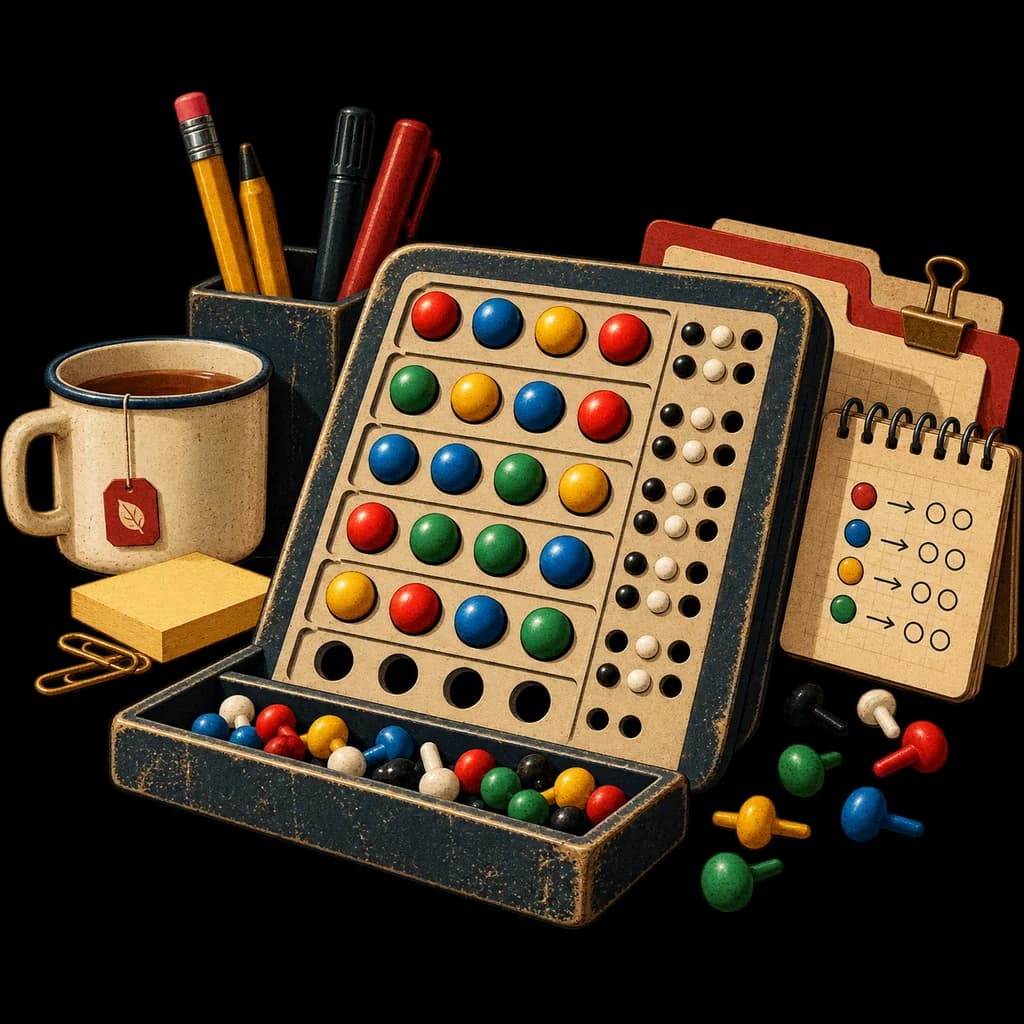
In Codebreaker, the game hides one four-symbol code made from six shapes. The same shape can appear more than once. Both players work on that code and take turns entering guesses.

After each guess, everyone sees two counts: symbols in exactly the right position, and correct symbols placed elsewhere. The clue does not tell you which specific positions or shapes earned those counts.

Solve all four positions on your turn and you win immediately. There are 12 guesses for the whole match, not 12 per player. If neither player solves the code before those guesses are used or the seven-minute match limit expires, the result is a draw.

You have 30 seconds to submit each turn. Missing that window passes play to the other person without using a guess.
Tips to win

  1. Read the whole shared guess history, including your opponent’s attempts.
  2. A clue of two exact matches does not identify which two slots are correct, so compare it with earlier clues before fixing any shape in place.
  3. Test a small change when you can: if you rearrange or replace everything at once, the next count may be harder to interpret.
  4. Repeated shapes are allowed. Do not rule them out just because a first guess used four different ones.

Make it an office break

Two colleagues who enjoy logic puzzles take a ten-minute break at the same table, each using a separate screen. Neither has to invent a secret code: the game supplies it, and both see the evidence after every guess.

One notices that a swapped pair changes the exact-match count. The other thinks a repeated shape explains the clues. They can compare their reasoning when the match ends, including the mistaken assumptions that looked convincing for a turn.

The 30-second turns keep the exchange moving, while the seven-minute match limit leaves time to return to work.

Why it helps at work

  • Exercises logical deduction and careful reading of clues
  • Shows how differently colleagues reason about the same evidence
  • A clear seven-minute limit

Play next